Selling Experience
Bukalapak.com
2019 - 2020
Seller post-transaction experience team goal was to create seamless experience for sellers to manage their transactions or orders. From the mid year of 2019 to the beginning of 2020 we’ve been focusing on reducing the numbers of complaints to our Customer Service regarding refund. Additionally, we also wanted to reduce the number of abandoned orders on our platform.
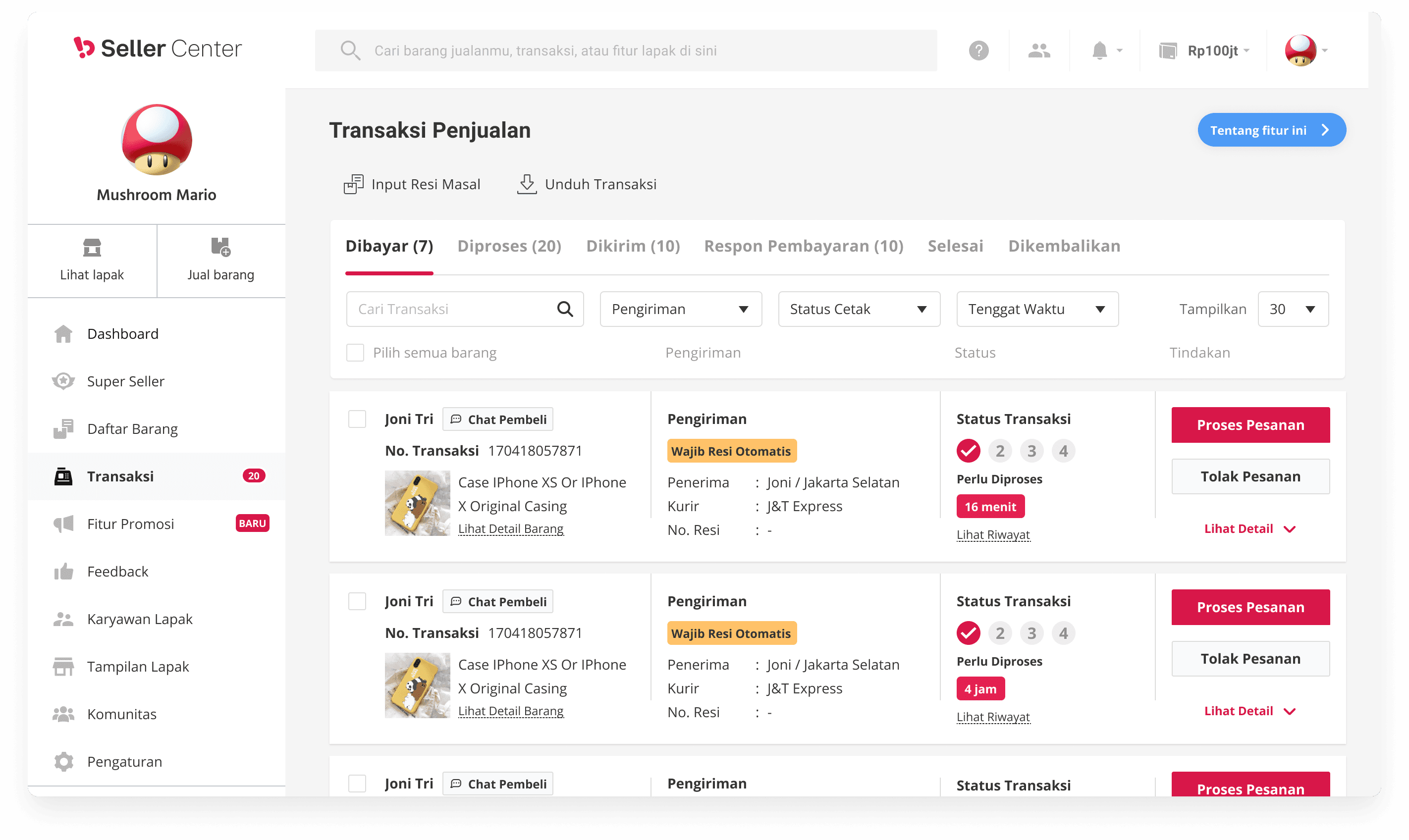
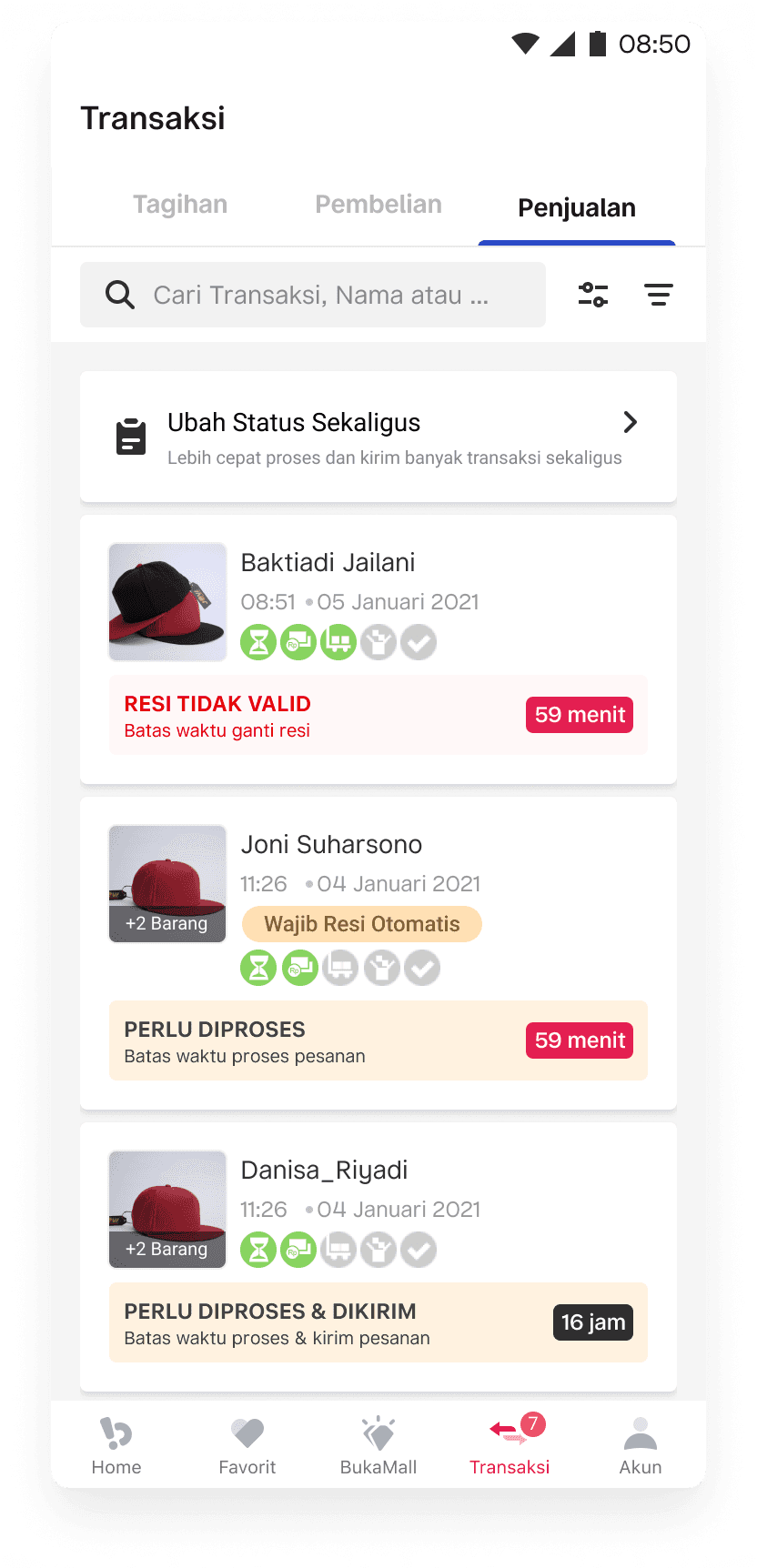
Order Cancelation Feature
Background
We figured out that the number of complaints in our customer service has spiked, especially regarding refunds. We figured out that there were 50% report on our customer service were regarding order cancelation.
Those report we received were about:
1.
Buyers want to get their money faster after they cancel their transaction.
2.
Sellers want to reject the orders for several reasons.
3.
Buyers complained about the abandoned orders.
Goal
We decided to address these two main goals:
1.
Decreased number of complaints.
2.
Decreased number of abandoned orders.
Impact
Reduced customer service contact from buyers by ~11% and sellers by ~50%.
Helped 33% buyers get their money within 15 minutes after they canceled their orders.
A decrease in the number of abandoned orders albeit insignificant.
Research
Based on research conducted by a data scientist and UX researcher, we figured there were 5 reasons why our users refered to customer service regarding refund:
Cancellation from buyer needed seller approval.
When the buyer requested a cancellation, the order wouldn't be canceled until the seller accepted the request. Meanwhile, the seller did not respond at all.
Buyers tended to cancel orders within 5 minutes after the purchase was made
It had been a hassle if they had to wait for the seller’s responses, thus customer service came to the rescue
Sellers could not cancel orders after they had accepted them.
This could have led to the seller contacting our customer service to handle the cancellation for them.
Sellers wanted to avoid punishment by contacting customer service.
Cancelling the order by themselves would have gotten them punished with negative feedbacks.
Customer service was so much faster than waiting for seller/buyer’s response
This situation might create an illusion, as the cancellation of an order still requires approval from both the seller and the buyer.
Intent Statement
We decided to define our intent statements based on the research we had. These two intent statements would help to generate the ideas to solve the problems and to set the scope and success metrics.
The intent statement format consisted of three parts: who + what + wow
Who is the user, what is what we want them to do, and wow is the tangible wow factor.
1.
Seller aware of transaction cancelation request so no cancelation request on the system left unchecked
2.
Buyer can fully utilize cancellation feature without going to BukaBantuan (customer service)
Design Solutions
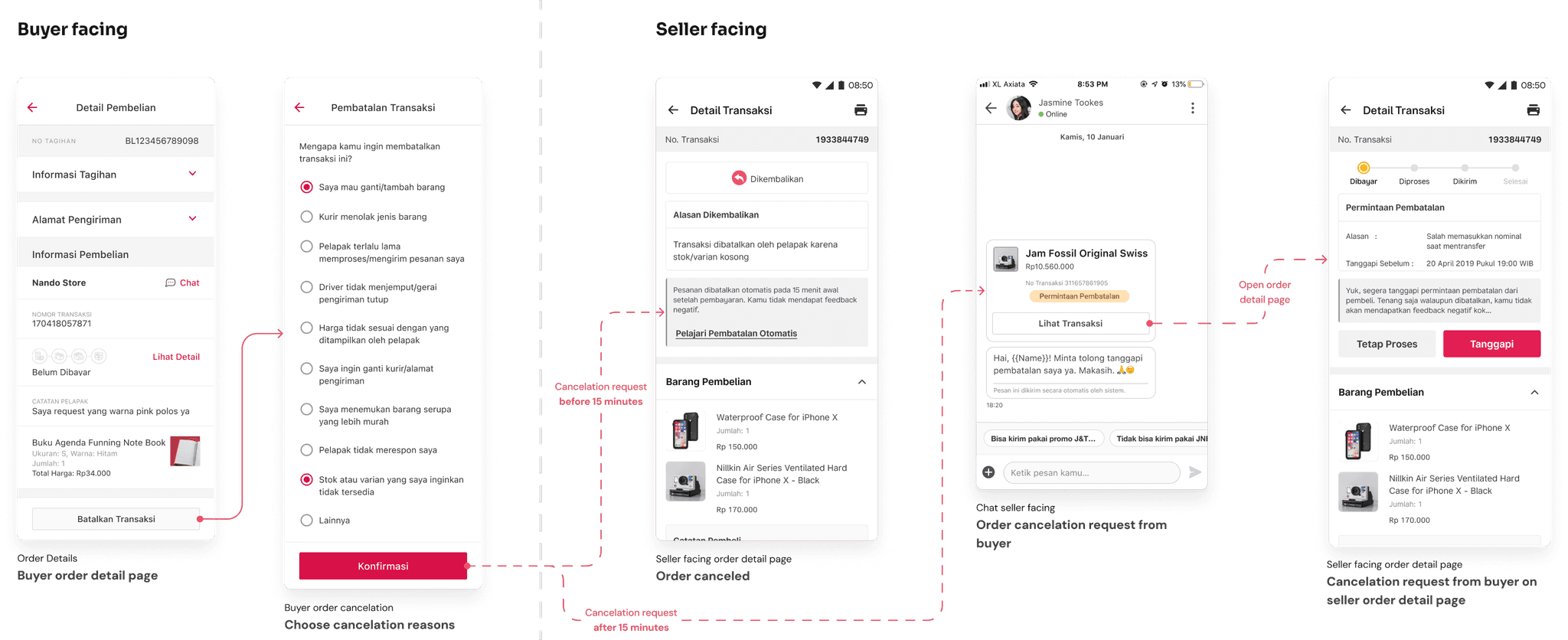
Instant cancelation within 15 minutes
When buyers canceled the orders within 15 minutes after purchase, the cancellation would not require acceptance from sellers.
On the other hand, when cancellations occurred after 15 minutes or when orders were already accepted by sellers, sellers would be notified via chat. I utilized chat because I found insights saying that sellers pay attention to chats rather than notifications.
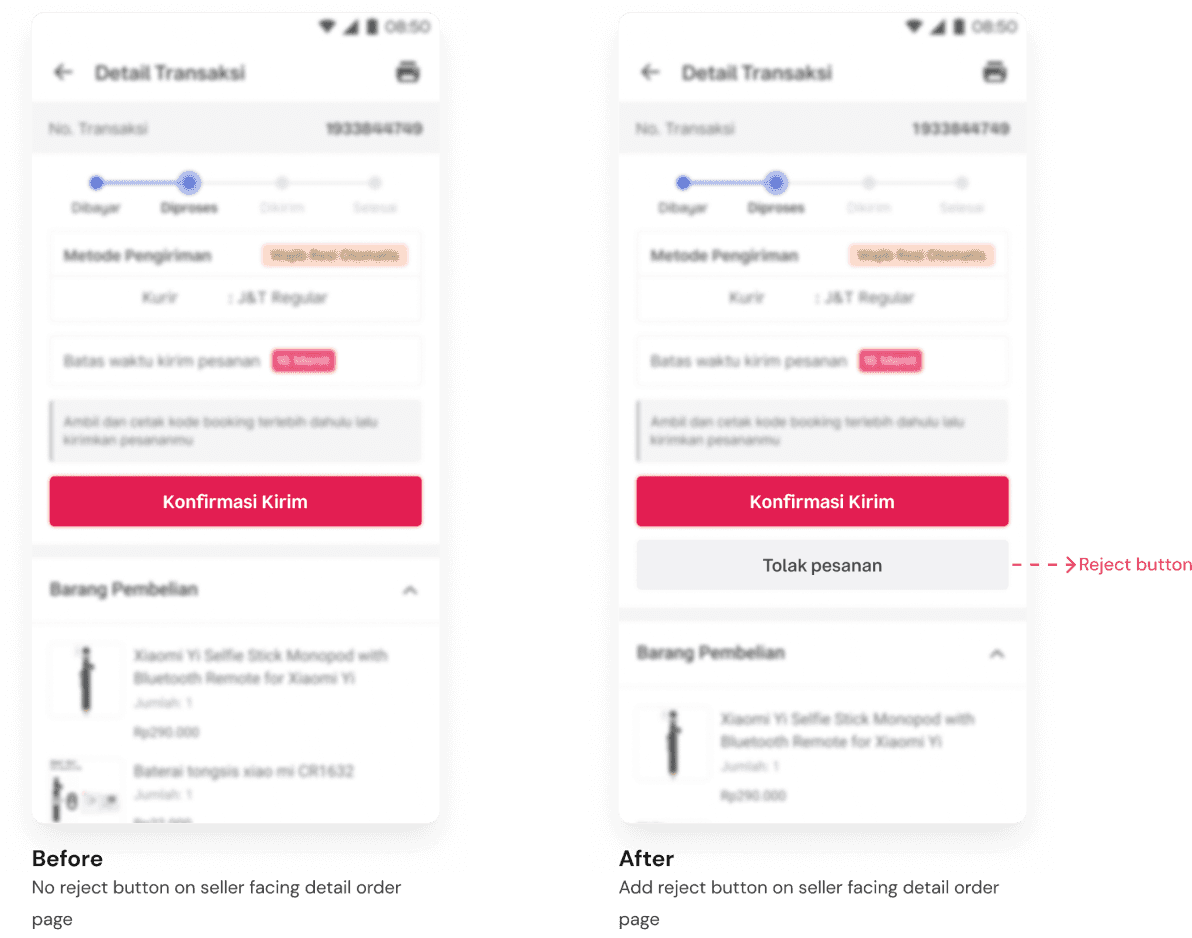
Reject order button
For sellers who wanted to reject the orders after accepting, we added a “Tolak pesanan” button, which previously wasn’t available.
This button added with intention to address the ~31% of sellers who requested CS assistance to cancel their orders after accepting them.
Additionally, a rule of 1 negative feedback for each cancellation were added to prevent the abuse of the button
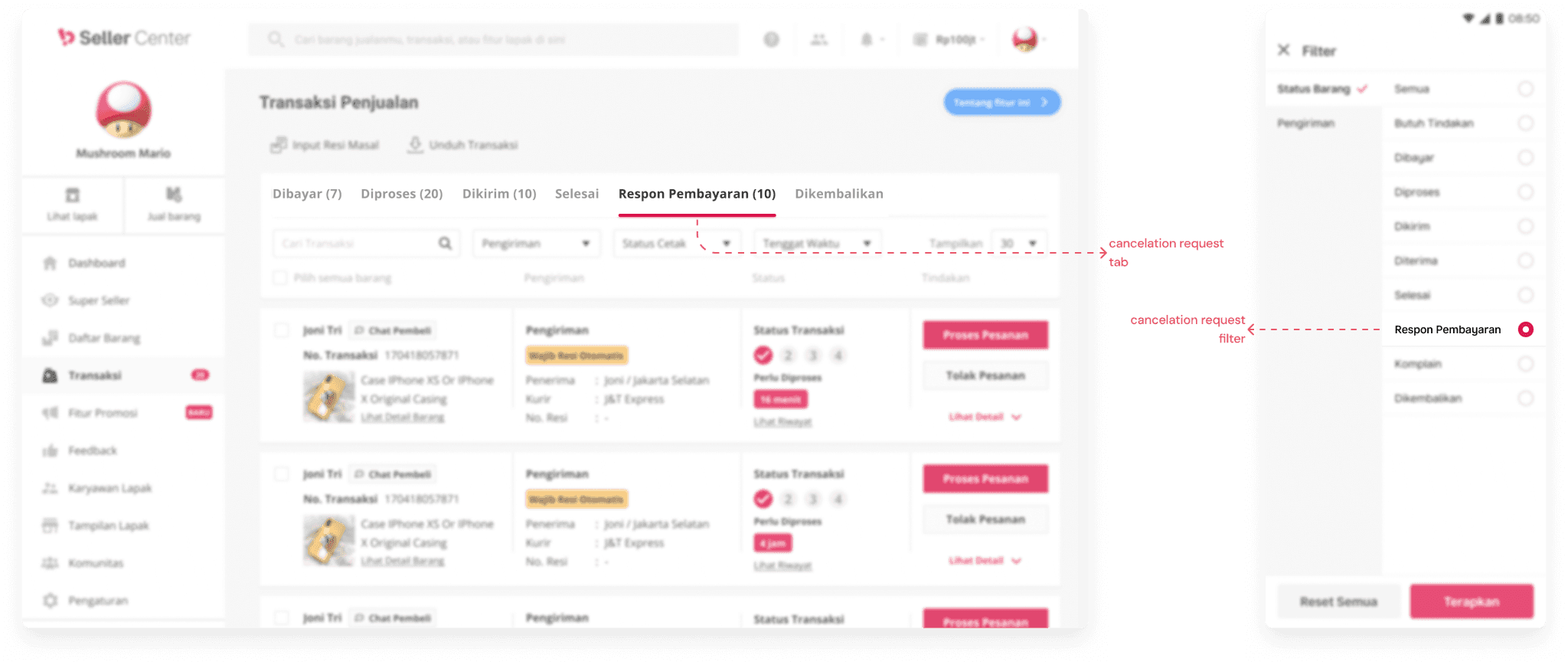
Add order cancelation request tab on Seller Center and filter on Apps
The goal was to make sellers aware of the cancellation requests. An additional tab was added to consolidate all cancellation requests from buyers on one page and filter on apps so sellers on Seller Center know at a glance if they have cancellation requests to respond to.
Change cancelation reasons
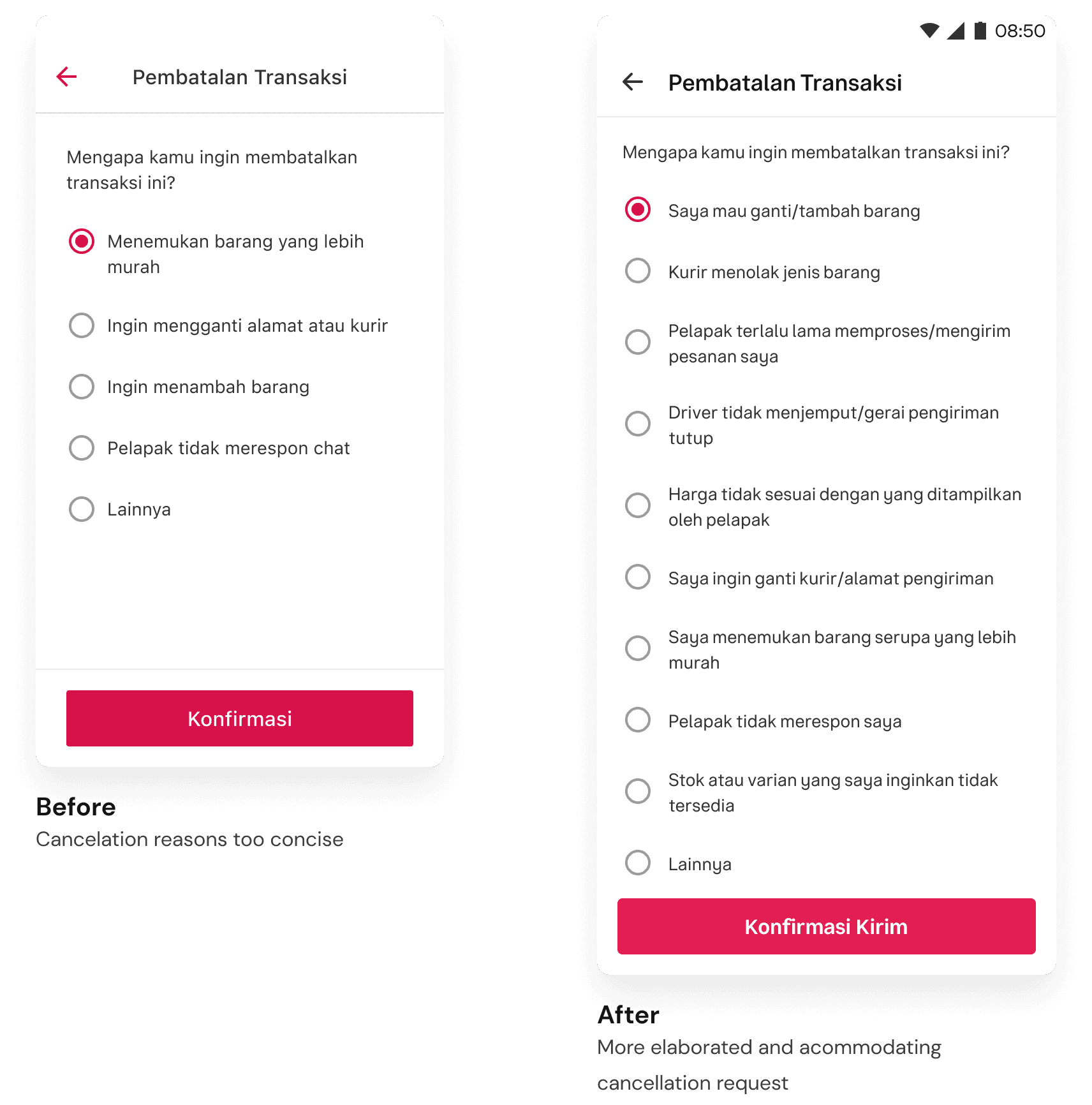
A supplementary solution was the elaborated cancellation reasons to accommodate users, since the previous ones didn’t capture the actual reasons behind their decision to cancel transactions.
Datas were curated from our customer service contact reports, interviews, and surveys to identify the most commonly cited reasons by both sellers and buyers when they wanted to cancel an order.
Order Card Redesign
Background
Although on the previous project we managed to reduce the number of abandoned orders, the numbers were still high, and we figured that 45% of refunded orders were caused by abandoned orders.
Additionally, 63% of the abandoned orders were in a paid state, meaning they were already paid by buyers but not processed or rejected by sellers until they expired and were refunded by the system
Goal
Initially our goal was:
Fasten the process for buyers to receive their money back
Product team wanted to fasten the process which was originally could take 24-48 hours or more by adding deadline to sellers. The hypothesis behind this goal were:
1.
The quicker sellers act on orders, the sooner buyers will receive assurance regarding the progression or cancellation of their orders.
2.
By introducing this additional deadline, we aim to diminish the backlog of orders for sellers.
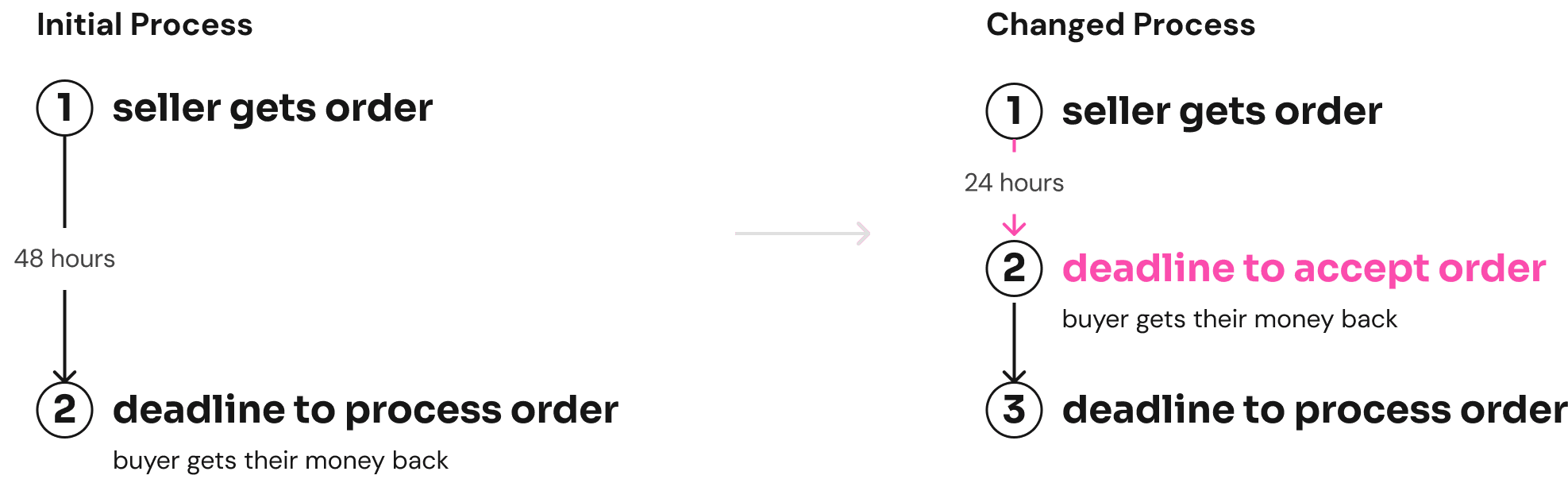
However, the solutions from the product team didn’t address the underlying problem of what was causing the abandonment of the order. Therefore, I took the initiative to lower the number of abandoned orders on the seller side by observed how they interact with the seller-facing order page.
Outcome
We tested the design to our users and got positive feedback about the design especially on the deadline and the “yellow box”
1.
Successful launch
Not only did we change the design on mobile, but the design was also implemented in the seller center dashboard on desktop, allowing sellers to have seamless experiences on all platforms.
2.
Improved selling experience
User research showed faster processing of orders compared to old ones. It's also easier for participants to differentiate each order status and take the appropriate actions
Research
User interviews with the UX researcher were conducted to discover how sellers interact with the apps and find problems that lead to order abandonment, resulting in the insights below:
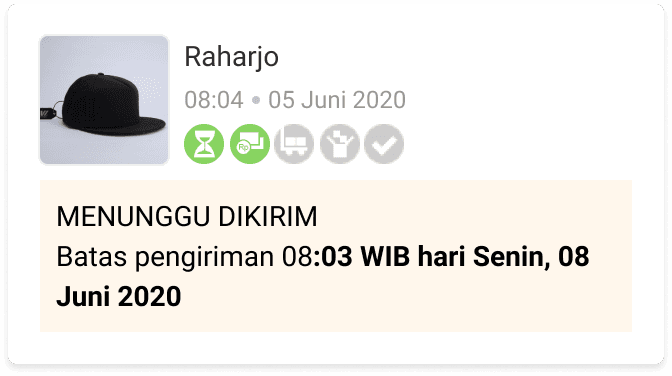
Cards looked all the same
Cards for orders that needed to be processed had the same copy and the same design, making it harder for sellers to distinguish each card.
1/5
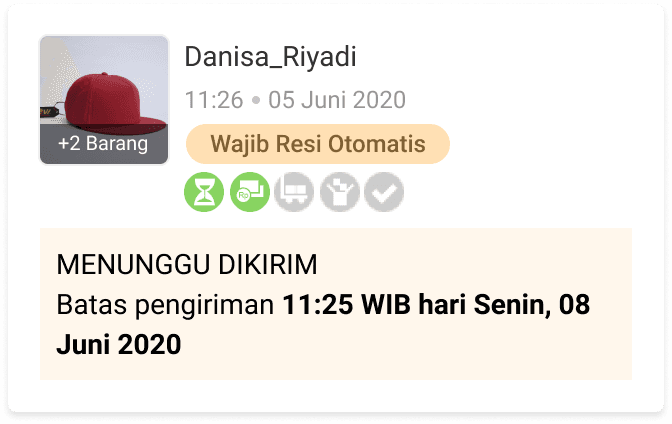
Cards didn’t look clickable.
Cards with non-urgent actions that didn't look clickable made sellers hesitate to click
2/5


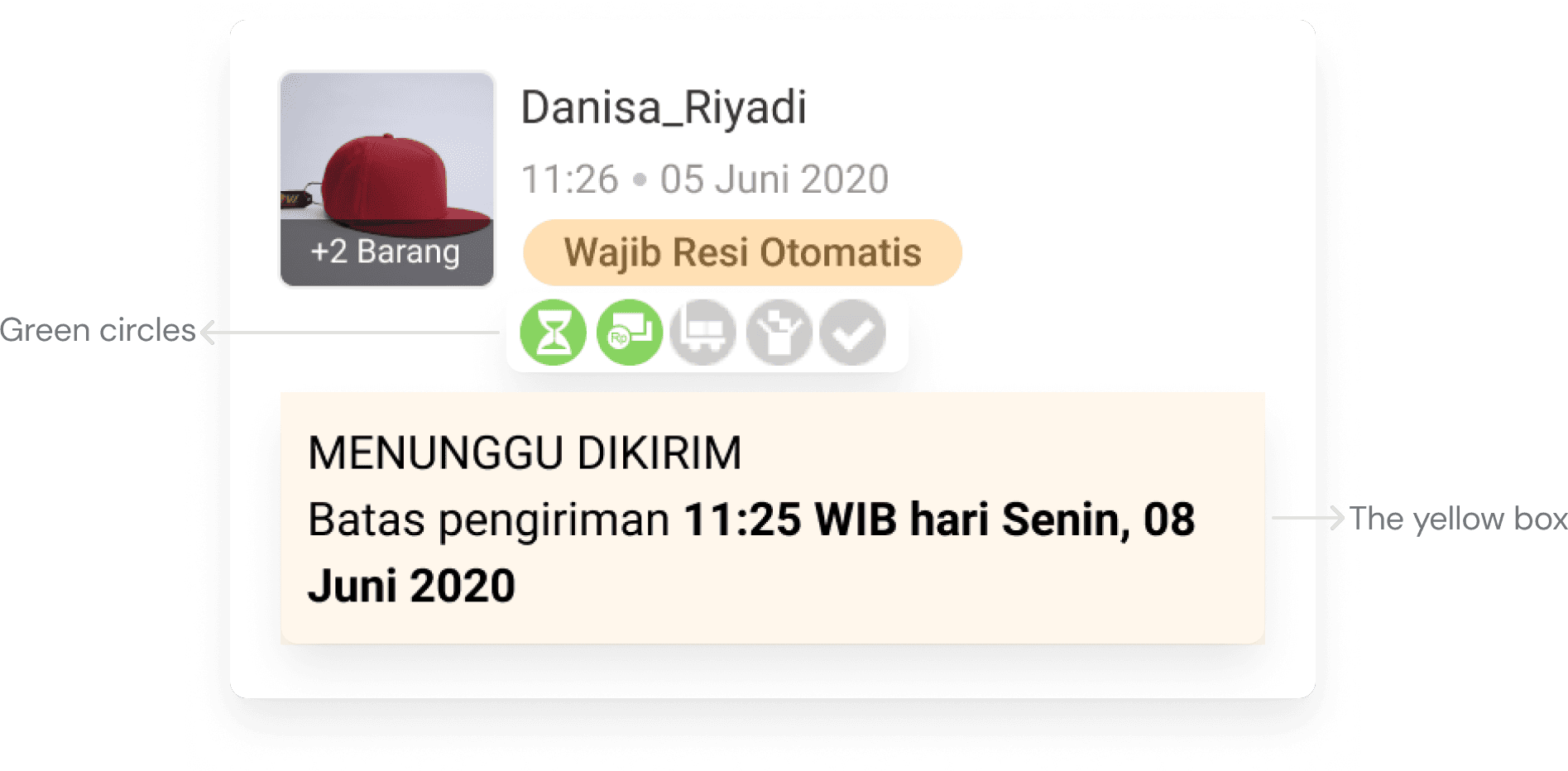
Adapted with the yellow box and green circles
Though they didn’t understand what it implied, they utilized it anyway
3/5
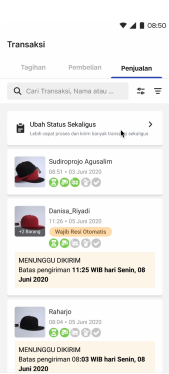
Filter then process
They utilized filters to process the orders. Once they done with all the orders on one filter, they move to other filters
4/5
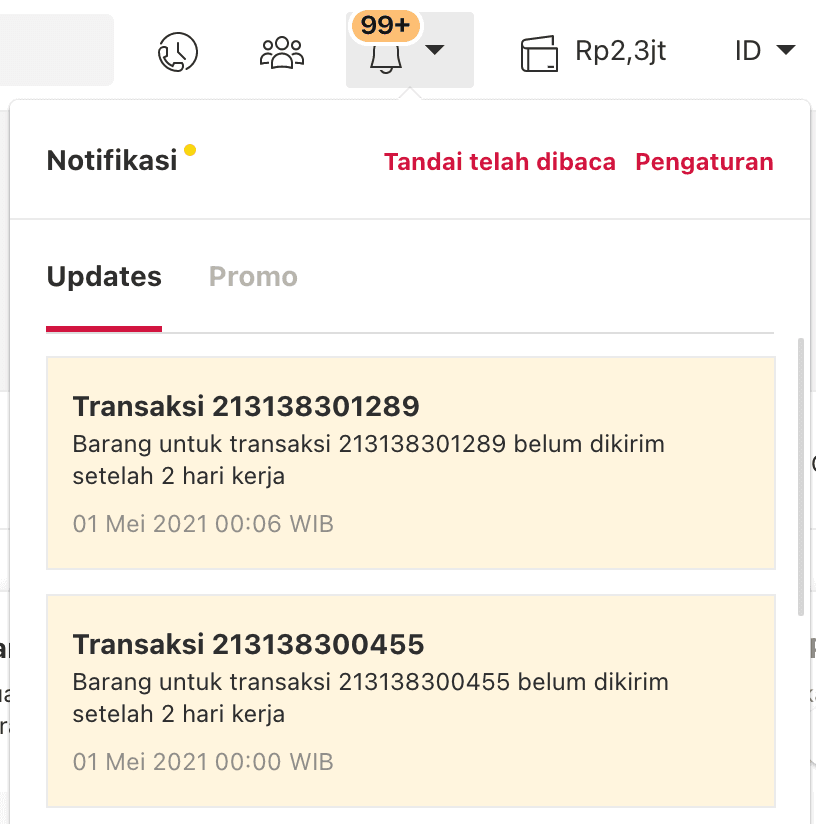
Did not even notice the notification
Sellers tended to overlook notifications, potentially leading to order abandonment.
5/5
Design Solutions
Exploration on Order cards
In order to show the deadline, I did several explorations on the card. I wanted to utilize the “yellow box” while trying to show important informations to our sellers
Unfortunately, due to the big plan of creating a seller app, the changes in this phase should be minimal. Therefore, it was limited to the order cards only
Current card design
Sudiroprojo Agusalim
08:51
03 Juni 2020



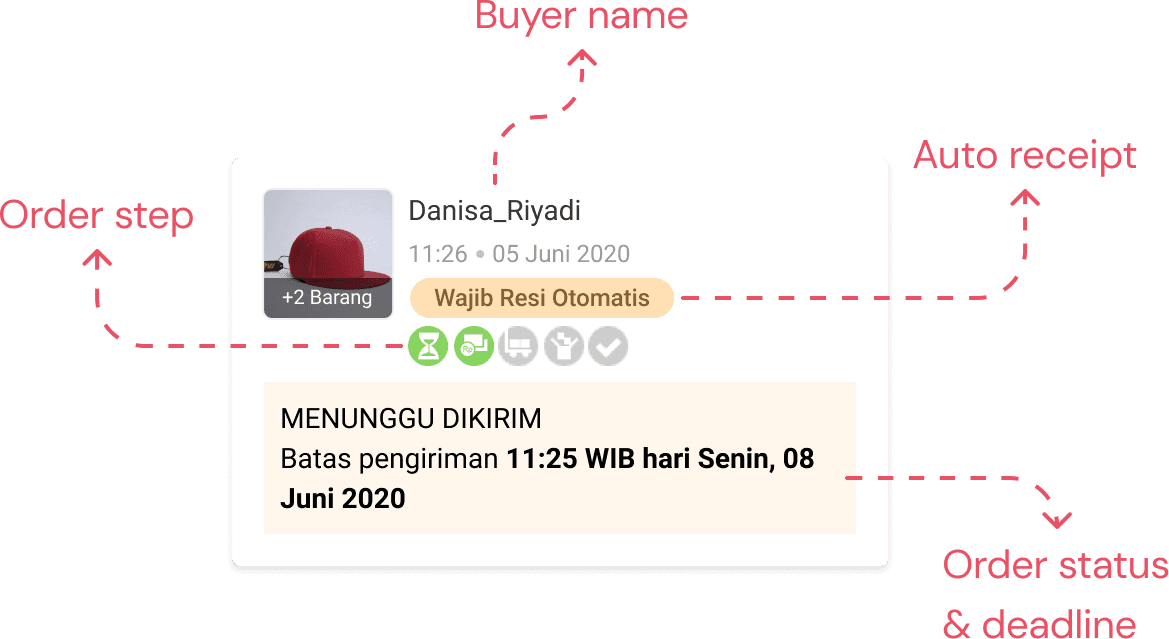
Show prominent deadline
This solution is to inform users about their deadline because the rules were changed.
I designed the countdown with different colors. Red is for the deadline > 10 hours and black is for ≥10 hours
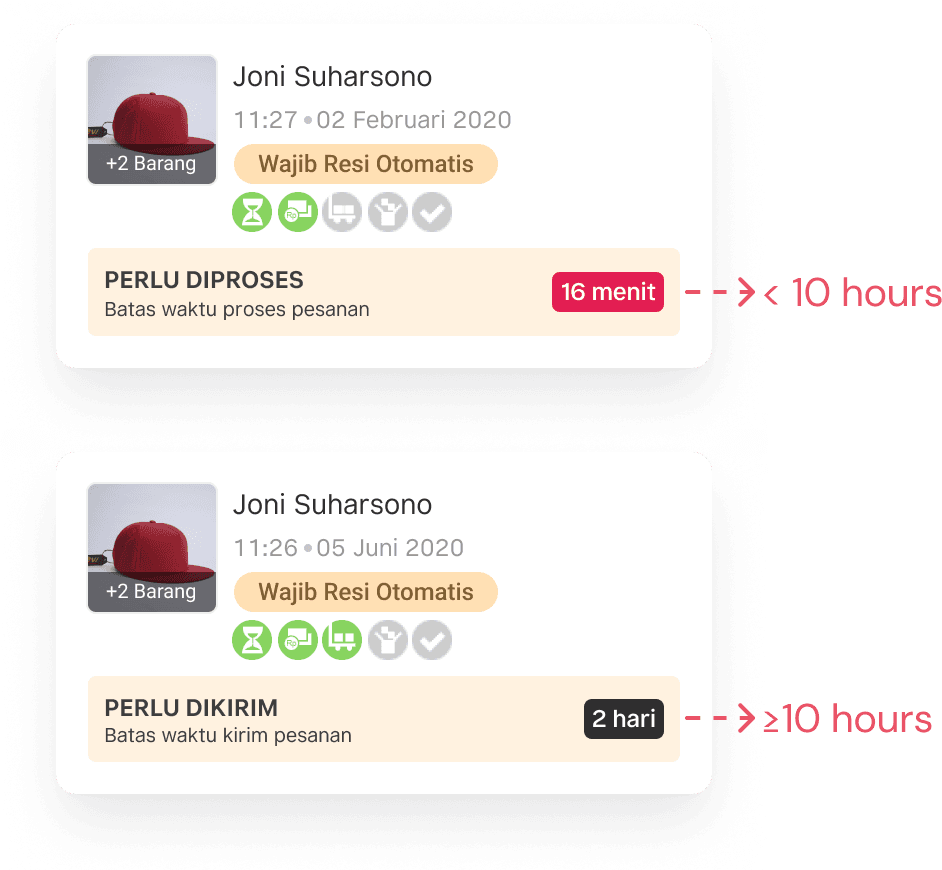
Order cards
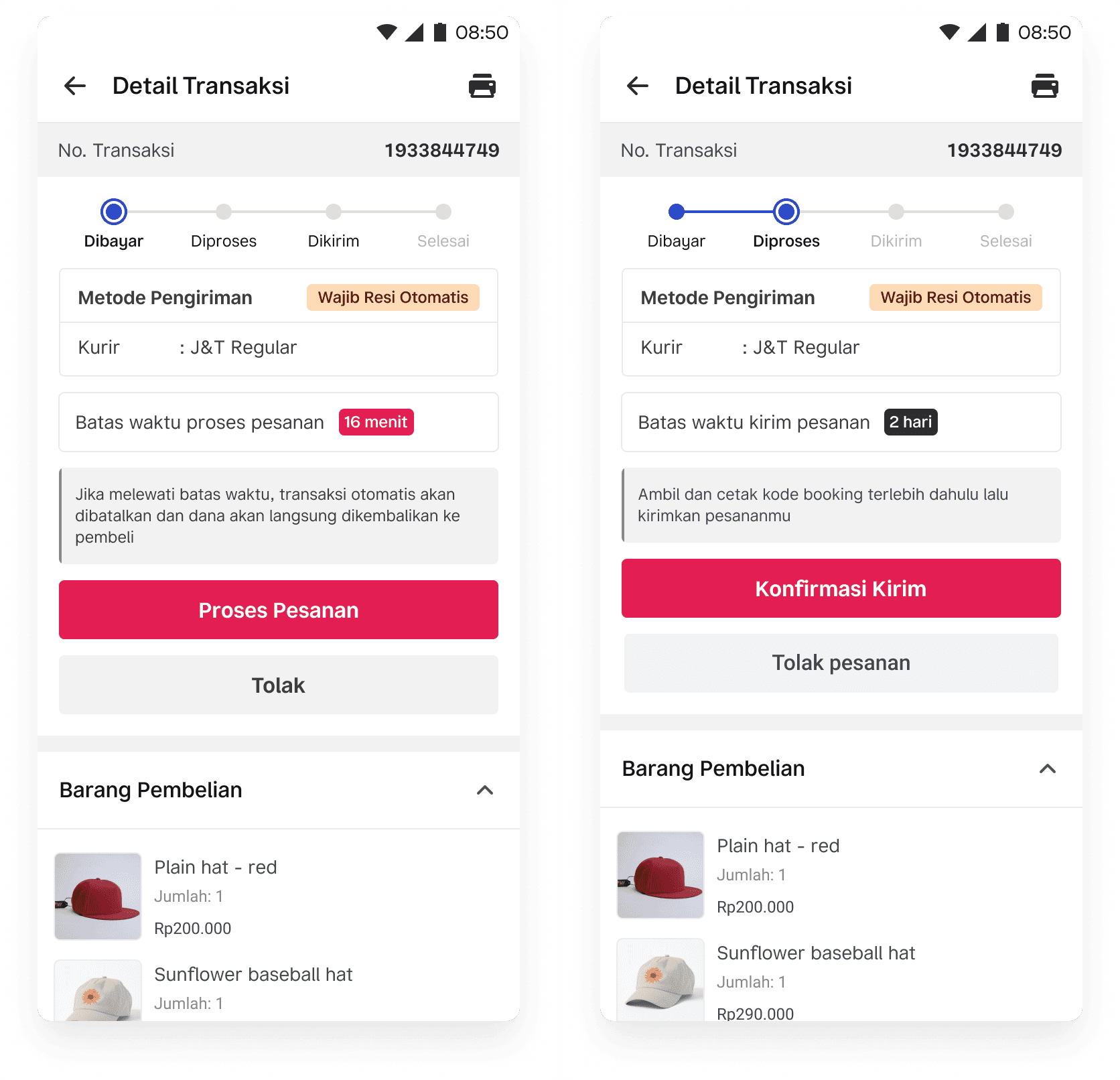
Order detail page
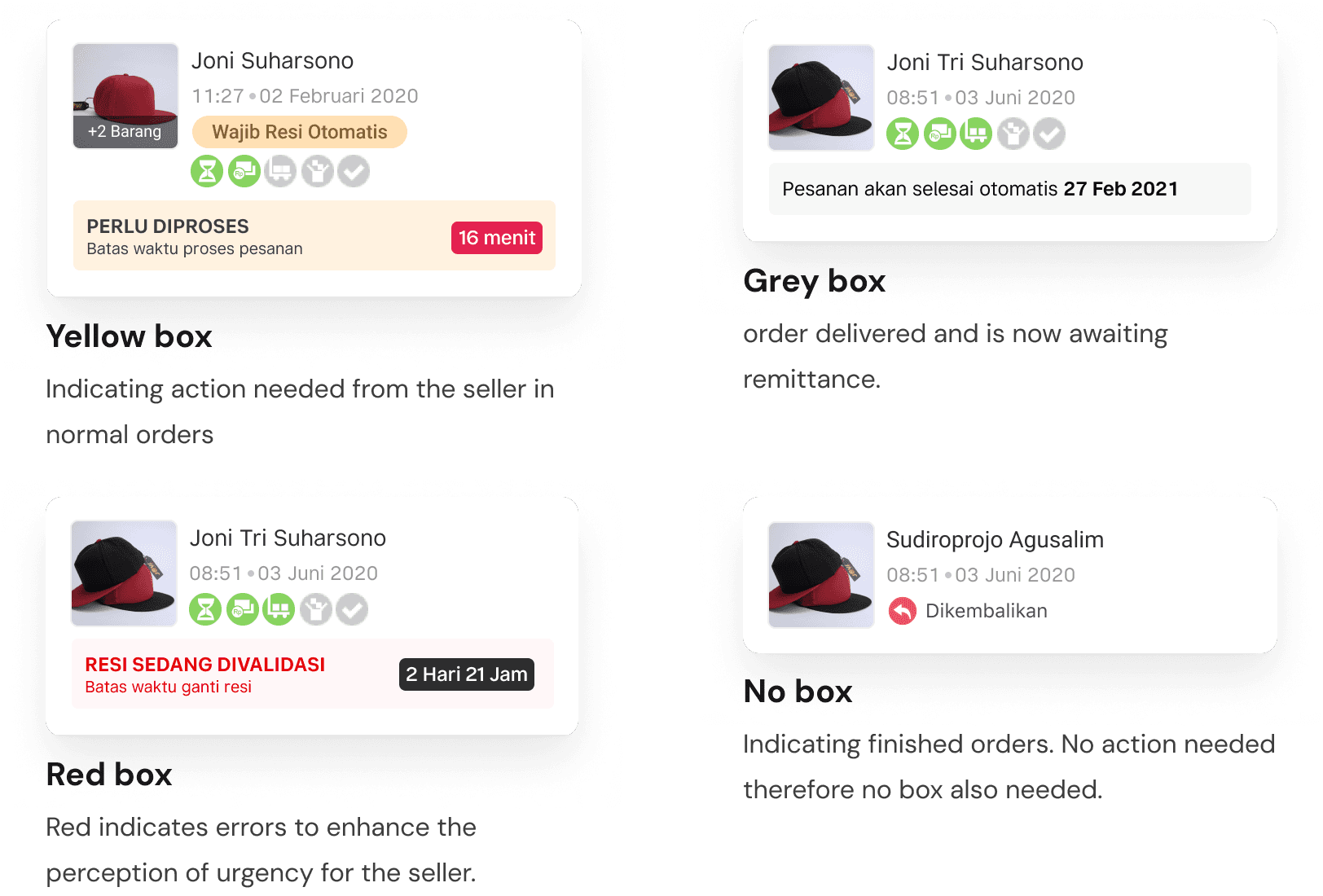
Add variations on the status box
Because the design on the deadline changed, I made the copy on the order card more compact as well.
Additionally, I kept the green circles and optimized the yellow box because sellers utilize that to determine their actions toward the orders. I added variations on the “yellow box” or status box to differentiate the cards based on its status
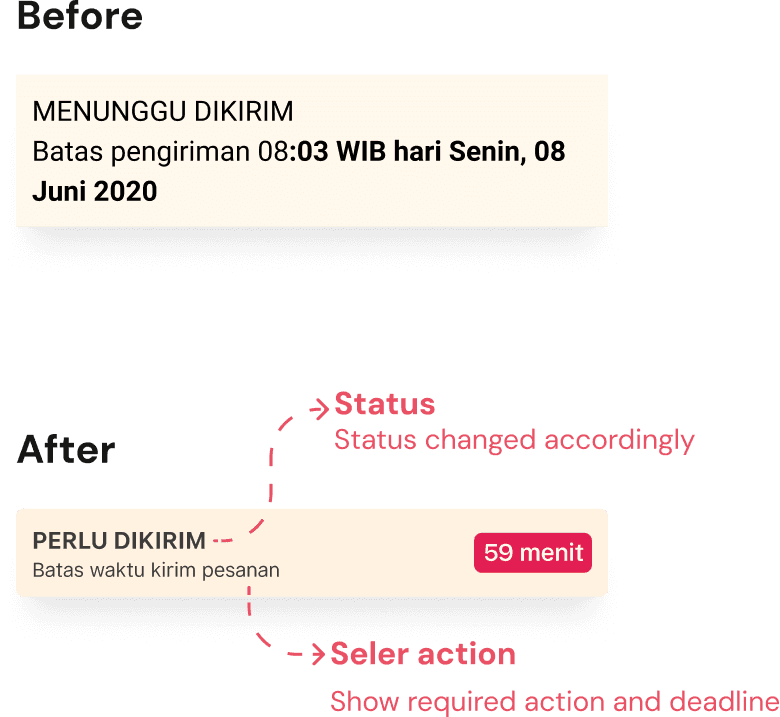
Change the sequence of order card
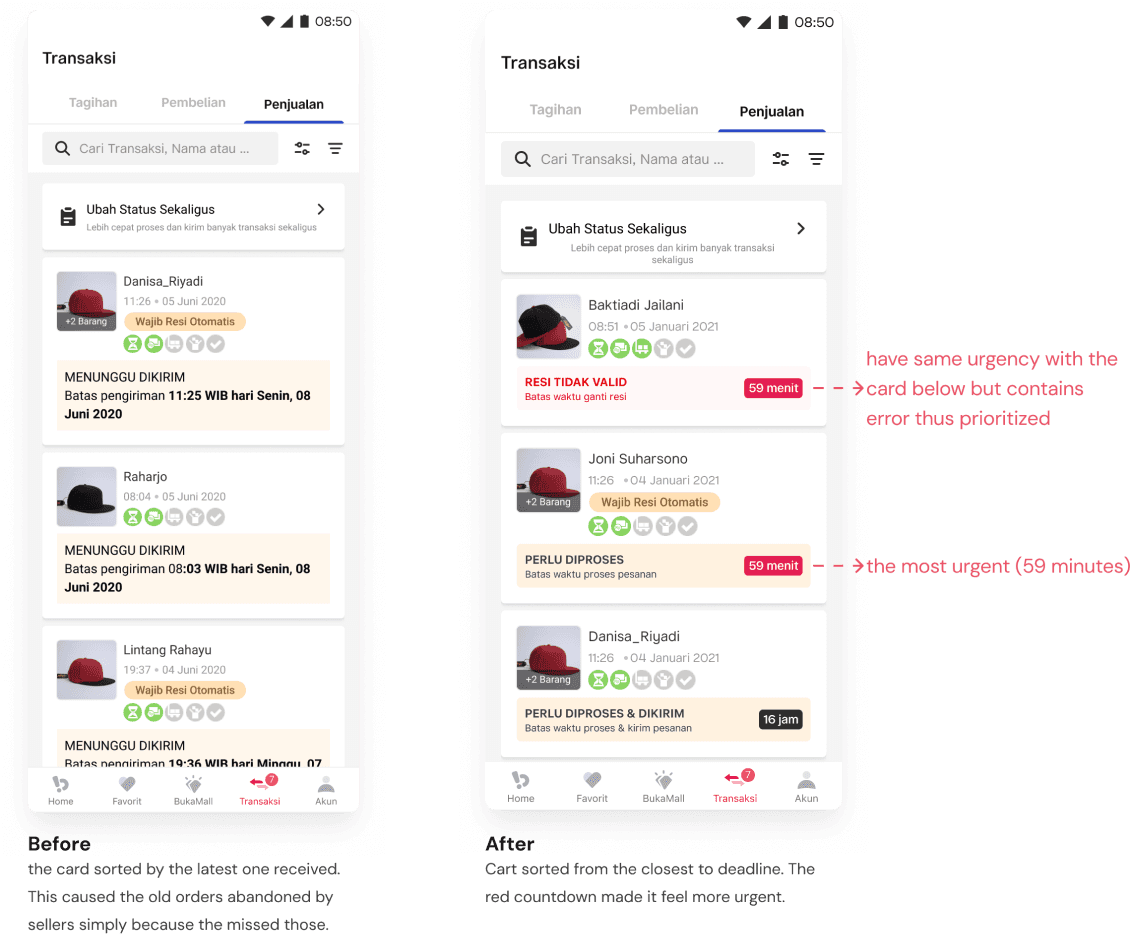
The objective was for the sellers to process their orders so no orders were left abandoned.
Due to limitations, I couldn’t separate the orders into tabs or put the filter out, so I sorted the order cards from the most urgent or the least time so sellers would process the ones that needed to be processed the most.
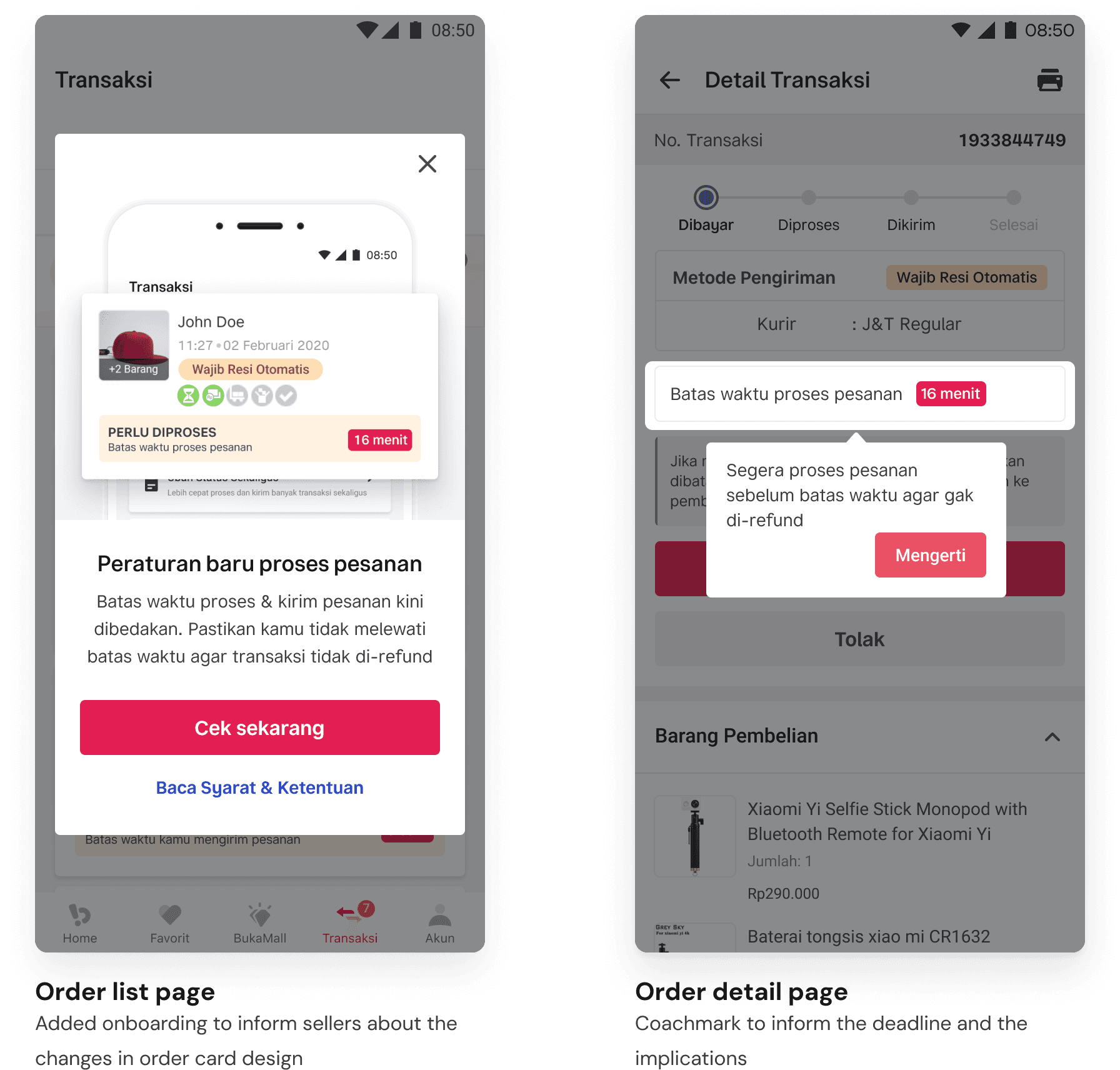
Add onboarding to help sellers familiarized
Onboarding provided when users landed on the Order page and the Order detail page, informing them of the changes on the order cards and additional section of the order deadline
Takeaways
Iterations on design even though the product already shipped is important. The iterations doesn’t necessarily had to be on the same design or flows as long the solutions solved the problems we faced.